Iijoki Rapids Fishing Area
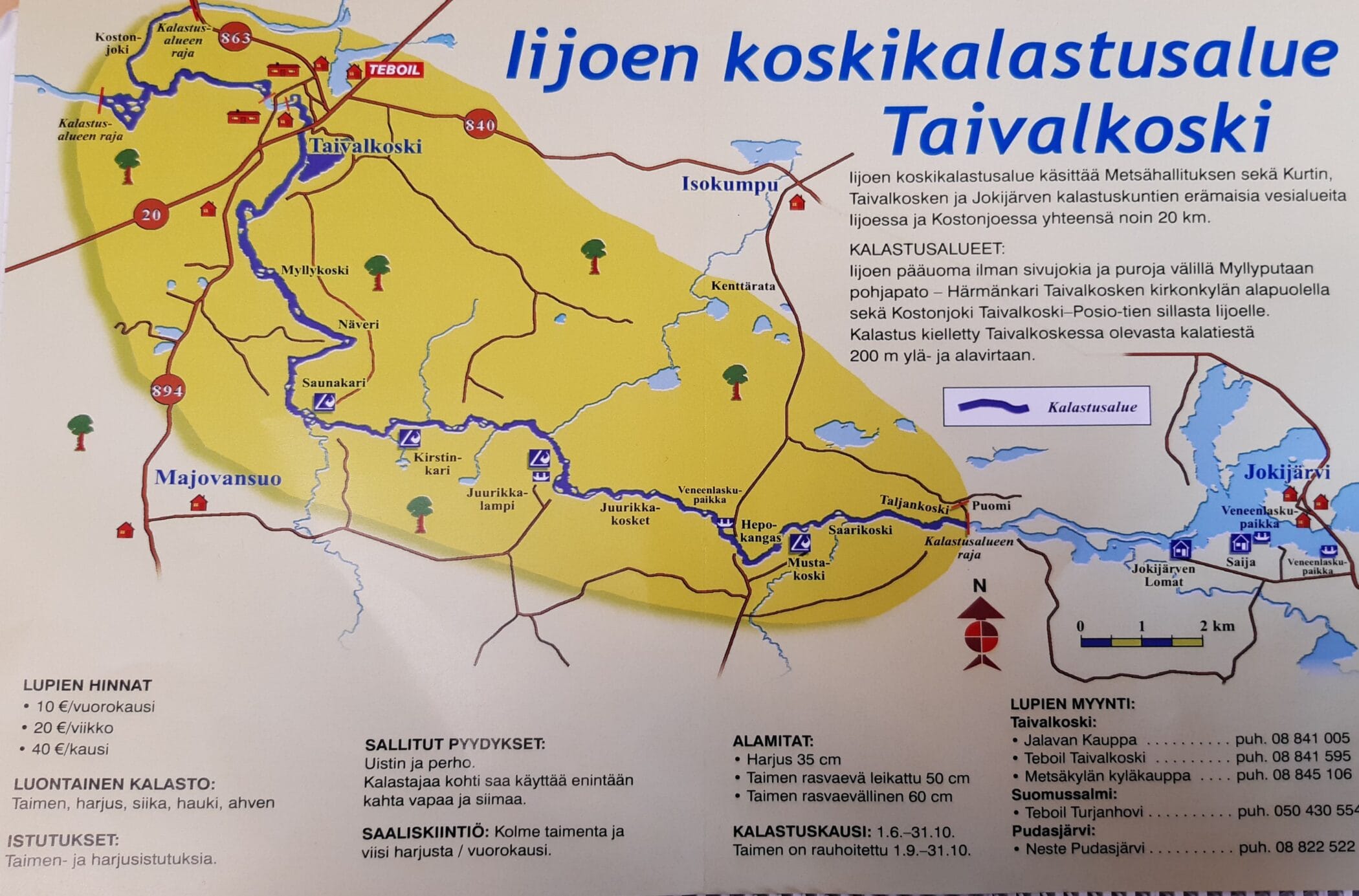
This approximately 20-kilometre-long rapids fishing destination between Jokijärvi and the centre of Taivalkoski offers excellent spots favoured by grayling and brown trout for both shore anglers and canoeists. The area includes 22 rapids and faster-flowing sections. This wilderness-like river stretch, accessible from forest roads, is an excellent fly-fishing area for grayling. It is easy to move along the riverbanks, and there are several lean-to shelters and campfire sites available for anglers and canoeists.
The rapids fishing area is clearly a grayling destination. The size of grayling varies from one fishing season to another, but the most common catch size is 30–40 cm, although fish weighing over one kilo are also caught every year. Brown trout can be found steadily throughout the area, with an average size of 1–2 kg, although larger individuals are also occasionally caught. There is some whitefish in the river, but it is clearly the most underfished species. This is mainly because the fish tend to stay in pools that are more difficult to fish, although there are relatively few such pools in the area. In slower-flowing river sections and pools, there are good opportunities to fish for pike and, at times, perch.
Fishing area
The main channel of the Iijoki River, excluding tributaries and streams, between the Myllyputaa submerged dam and Härmänkari below the centre of Taivalkoski. Fishing is prohibited within 200 metres upstream and downstream of the fishway in Taivalkoski.
Natural fish species
Grayling, brown trout, pike, perch, whitefish.
Stocking
Juvenile grayling and brown trout stocking.
Fishing season
1 June–31 October.
Brown trout is protected from 1 September to 31 October.
The fishing season begins at the start of June, when grayling spawning is over and most of the ice has melted from the riverbanks. This means that fly fishers cannot access the river during the early spring stonefly season. Fishing can continue in autumn, even after the trout protection period has begun, all the way until the end of October if weather conditions allow.
The area is busiest with anglers in July. In June and late summer, however, you can have the river almost to yourself, and the further into autumn you go, the fewer people there are on the river. If you have the opportunity to visit the river between August and October, that is when the river is at its best, especially for grayling fishing, as the water temperature begins to drop and the nights grow darker.
Water level
In a normal spring, floods are over by mid-June, but the progress or delay of spring can shift the timing by as much as a couple of weeks.
The next rise in water level takes place in early July. This is due to a small amount of extra water being released into the river from the regulated Lake Irnijärvi for the Iijokisoutu rowing event. However, this rise in water level does not significantly affect fishing.
In July, the water level varies depending on rainfall. In August, the water situation is usually at its most normal, and as autumn progresses, the water level generally drops lower.
An important tip to remember is that the river remains suitable for fishing even during lower summer and autumn water levels.
The river’s average discharge is 19 m³/s, and the total drop is approximately 29 metres from Jokijärvi to Taivalkoski.
Permitted fishing methods
Spinning, fly fishing and jig fishing. Each angler may use a maximum of two rods and lines.
Restrictions
Catch quota:
5 grayling and 3 brown trout per permit day.
Minimum sizes:
Grayling: 35 cm
Brown trout with clipped adipose fin: 50 cm
Brown trout with adipose fin: protected
Fishing permits
Fishing is permitted only with the Iijoki Rapids Fishing Area fishing permit.
Online
Kalakortti.com
Taivalkoski
Kosken Toppari
Ouluntie 1
Tel. +358 40 552 8897
Metsäkylä Village Shop
Metsäkyläntie 317a
Tel. +358 400 244 184
Pudasjärvi
Neste Pudasjärvi
Pietarilantie 46
Tel. +358 8 822 522
Suomussalmi
Turjanhovi
Kalliokatu 2
Tel. +358 50 430 5545
Permit prices
Day permit: €15
Week permit: €30
Season permit: €50
Further information
Hannu Pitkänen
Tel. +358 40 531 9658
Fishing equipment
In terms of the size of the river, the area is well suited for fishing with light spinning and fly-fishing gear.
Spinning
For anglers targeting salmonid fish, the lure box will mainly include small spoons, spinners and 3–7 cm wobblers used for grayling and brown trout. Lure weights vary from 5 to 20 grams. One of the most popular lures — both effective and long-casting — is probably the small or medium-sized Lotto spinner, more or less decorated with fluorescent colours.
For pike fishing, larger wobblers, spoons and spinners are used. In addition to salmonid lures, jigs in different colours are suitable for catching perch.
Fly fishing
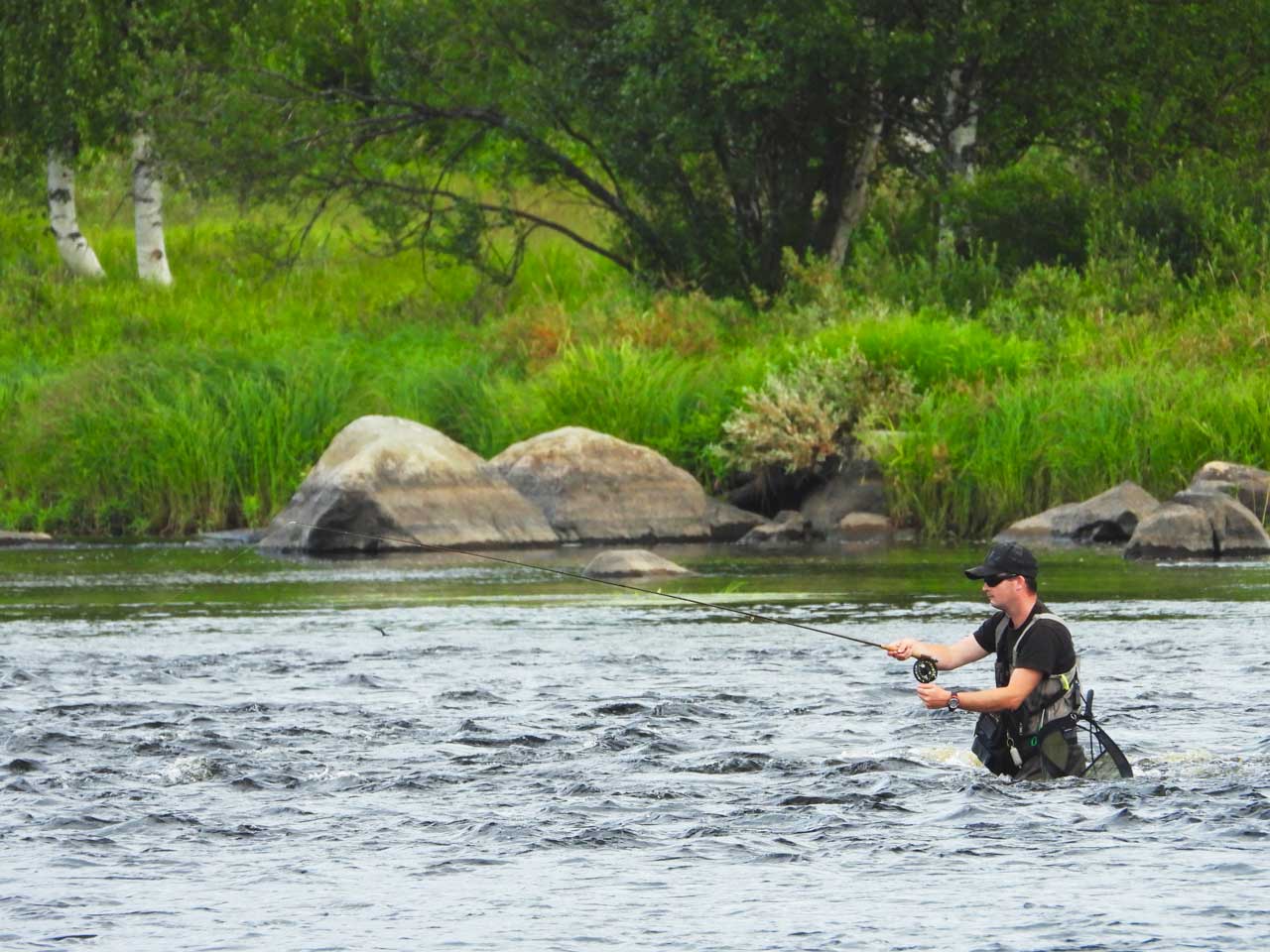
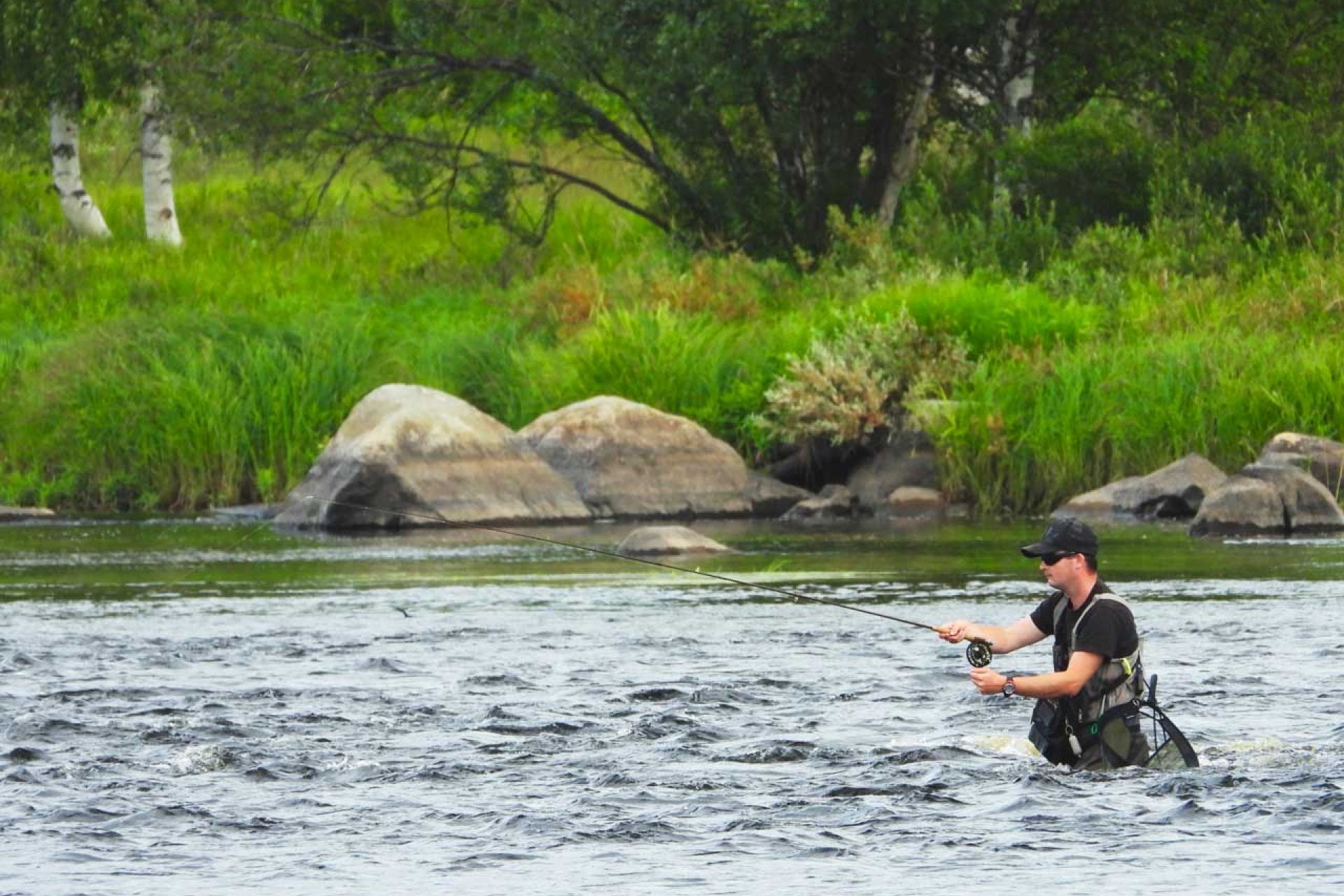
The diversity of the rapids fishing area allows different techniques and tactics to be used effectively. There is plenty of choice. In the upper reaches, where the river is smaller and the fishing spots require precise casting, light equipment is recommended. A general-purpose rod is around class #5, but even a class #3 rod works well. A floating line is sufficient.
The bottom of the rapids consists of small stones, making the area very suitable for wading. Anglers should of course have waders, and for safety reasons, the use of a wading staff is recommended.
Effective flies
The insect life on the Iijoki is relatively limited, and large hatches are rare. In June, the season begins with stoneflies, such as Diura, and mayflies. Around the turn of June and July, dipterans and the first caddisflies appear.
From July into August, caddisflies and terrestrial insects dominate. In September, mayflies and stoneflies start to appear more again. In October, only dipterans and stoneflies remain.
The insect and fly size range is #12–18, which is perhaps slightly smaller than usual. Because many undersized fish are likely to be caught, the use of barbless hooks is recommended. Fish fry imitations should also not be forgotten, as they are attractive to both brown trout and grayling, especially in autumn when the water cools.
In the Iijoki Rapids Fishing Area, as elsewhere, flies change according to the development of insect life and water conditions.
In early summer, when the water is high and fairly cold, larvae and streamers are known to be the most effective flies. In summer, once the water temperature has risen above +10°C and the floods have levelled out, pupae and traditional wet flies become the most useful.
Late summer, in turn, is more of a dry-fly season. This division of flies is quite general, and it is worth remembering that trying a variety of flies often reveals surprisingly effective patterns. If the fish seem passive, changing fishing techniques and flies often brings positive results.
There are, however, some special flies for the Iijoki. These include blue-toned flies, black-and-white nymphs and mini streamers.
Effective flies vary quite a lot from year to year, and a special colour combination that worked one year may no longer work as well the following summer. But by slightly changing the colour shades, the fly can often become effective again. Each year requires its own initial search period when it comes to special flies.
Among reliable basic dry flies, examples include Elk Hair Caddis, CDC sedges, Klinkhåmer Special, Super Pupa, Nelson Caddis, parachute-hackle Adams and small mayfly imitations.
Among pupae, brown and green shades work well.
For larvae, colours ranging from bright green through olive to white work well. Good basic patterns include caddis larvae imitations, but mayfly and stonefly nymphs should not be forgotten either.
Among streamers, yellow/red-bodied patterns work well early in the season, as do general bleak, minnow and bullhead imitations in sizes 4–12. Classic wet flies also work well.